

Many will consider historical experience proper for the past – after all, we live in the XXI century, everything is different now. They really shouldn't read Bismarck: the way to victory is paved "with iron and blood," said a statesman who was much wiser of all his contemporaries. Weaklings hate winners like the "Iron Chancellor", while the rest have much to learn
THE MAN & THE STATESMAN (PART SECOND)
Being The Reflections and Reminiscences of OTTO, PRINCE VON BISMARCK
HARPER & BROTHERS PUBLISHERS, NEW YORK AND LONDON, 1899
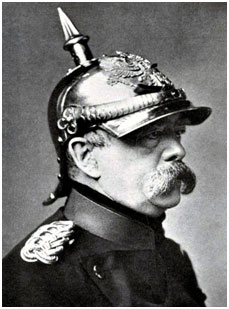
PERSONAL AND POLITICAL CREDO
My historical sympathies remained on the side of authority. (p. 1)
The faculty to admire individuals is only moderately developed in me, and it is rather a defect in my vision that it is sharper to detect weaknesses than merits. (p. 171)
I cannot justify, either in myself or in others, sympathies and antipathies with regard to foreign Powers and persons taking precedence over my sense of duty in the foreign service of my country; such an idea contains the embryo of disloyalty to the ruler or to the country which we serve. But especially if anyone wants to cut his standing diplomatic relations and the maintenance of our understanding in time of peace, after this pattern, he immediately ceases to be a politician, and acts according to his personal caprice. In my opinion, not even the king has the right to subordinate the interests of the country to his own feelings of love or hate towards foreigners… (p.172)
…I do not borrow the standard for my conduct towards foreign governments from stagnating antipathies, but only from the harm or good that I judge them capable of doing to Prussia. In the policy of sentiment there is no reciprocity of any kind—it is an exclusively Prussian peculiarity; every other government takes solely its own interests as the standard of its actions, however it may drape them with deductions of justice or sentiment. Our own sentiments people accept, and make capital of them, on the calculation that they do not permit us to withdraw from the process; and we are treated accordingly, that is, we are not even thanked and are respected only as serviceable dupes. (pp. 172-73)
To the question whether I was Russian or Occidental, I at that time always replied that I was a Prussian and that my ideal for one employed on foreign politics was freedom from prejudice, the habit of deciding independently of any feelings of antipathy to or preference for foreign states and their rulers. So far as concerns foreign countries… and as soon as it were proved to me that it was in the interests of a sound and well-thought out Prussian policy I would, with the same satisfaction, see our troops fire on French, Russians, English, or Austrians. In time of peace I consider it wanton self- debilitation to attract or encourage ill-temper, unless some practical political aim be connected therewith, and to sacrifice the liberty of one's future decisions and connections to vague and unrequited sympathies—concessions such as Austria now expects us to make with regard to Rastatt purely out of good nature and love of approbation. If we cannot at once expect any equivalent for any politeness of that kind, then we ought also to withhold our concession; the opportunity to give it value as an article of exchange may perhaps present itself at a later time. (p.188)
My respect for so-called public opinion — or, in other words, the clamour of orators and newspapers — has never been very great, but was still further materially lowered as regards foreign policy in the two cases compared above. (vol.2, p. 14)
…even where our feelings had been injured, it ought to be guided, not by our own irritation, but by consideration of its object. (vol.2, pp. 81-82)
Even in the most serious moments of my life I have never lost my sense of humour. (vol.3, р. 97)
Vanity is a mortgage that must be deducted from the abilities of the person burdened with it in order to establish a net income that remains as a useful product of his talents. (vol.3, p.)
WAR
It is easy for a statesman, whether he be in the cabinet or the chamber, to blow a blast with the wind of popularity on the trumpet of war, warming himself the while at his own fireside; or to thunder orations from this tribune and then to leave it to the musketeer who is bleeding to death in the snow, whether his system win fame and victory or no. There is nothing easier than that; but woe to the statesman who in these days does not look around him for a reason for war, which will hold water when the war is over… (vol.1, стр.80)
I am at the same time by no means shy of war - quite the reverse; I am also as indifferent to "revolutionary" or "Conservative" as I am to all phrases. (vol.2, p. 6)
From the military point of view our hands were tied as he said, and the blame for this was not his, but resulted from that want of system with which our policy was conducted, both in the military and the diplomatic departments …mixture of levity and niggardliness. From a military point of view especially it was of such a kind that the measures taken could lead only to the supposition that a martial or even a military solution of the questions in suspense would in the last instance not be considered in Berlin at all. Men were too much preoccupied with public opinion, speeches, newspapers and constitution-mongering to arrive at decided views and practical aims in the domain of foreign …policy. (pp. 76-77)
The fundamental error of the …policy of those days was that people fancied they could attain through publicist, parliamentary, or diplomatic hypocrisies results which could be had only by war or readiness for it, by fighting or by readiness to fight; in such shape that they seemed forced upon our virtuous moderation as a reward for the oratorical demonstration of our 'German sentiment.' At a later day these were known as 'moral conquests;' it was the hope that others would do for us what we dared not do for ourselves. (vol. 1, p. 84)
ALLIES & ALLIANCES
An alliance assumed a motive - a definite object. (vol.1, стр.282)
...but there is no doubt much in this: we have no alliances and carry out no foreign policy - that is, not actively - but content ourselves with picking up the stones that fall into our garden and brushing off, as well as we can, the mud that is flung at us. (vol.1, стр.173)
Alliances are the expression of common interests and purposes. Whether we have any purposes or conscious aims at all in our policy at this moment, I do not know; but that we have interests others will remind us fast enough. Yet up to the present we have the probability of an alliance only with those whose interests most traverse and contradict ours (vol.1, р.174)
But why should anyone do anything for us …and take up the cudgels for our interests? Had any one anything to hope for or to fear from us whether he did us that favour or not? That any one should act in politics out of complaisance or from a sentiment of justice others may expect from us, but not we from them. (vol.1, р. 176)
'Our internal relations suffer scarcely more from their own defects than they do from the painful and universal feeling of our loss of reputation abroad and the totally passive part played by our policy. We are a vain nation; we feel hurt directly we cannot swagger, and much, even in regard to our pockets, is forgiven and permitted a government which gives us importance abroad. …We are the best-natured and most harmless of politicians, and yet no one in reality trusts us; we are regarded as unsafe allies and harmless foes… I do not speak of the present; but can you name to me one positive plan (precautionary ones in plenty) or a purpose which we have had in foreign politics ... (vol. 1, pр. 178-79)
I found the position of the war too serious and too dangerous to consider myself justified, during a conflict in which not only our national future, but even our existence as a state, was at stake, in refusing any support whatever in critical turns of affairs. (vol. 2, p.114)
Published: 06/06/23